

Written by: Vihan Patel, Head of AI Solutions,
and Samuel Irvine Casey, AI Partner, Mantel
Key takeaways for business leaders:
- System One models, such as TypeSafe AI’s Jev, make fast, low-cost decisions within a fixed set of answers. They don’t generate text.
- Their advantage over LLMs is cost and speed, making it practical to check every record instead of a sample and to power real-time customer experiences.
- Strong early use cases include claims processing, fraud screening, data enrichment, and guardrails for AI agents.
- Calibrated confidence scores let businesses automate clear-cut decisions and send uncertain ones to people.
- Jev is in early access and served from the US, so data residency is the first consideration for Australian enterprises. High-volume LLM use cases are the best place to start.
System One models have captured global attention as a promising new class of AI model, following the launch of Jev by TypeSafe AI. While large language models (LLMs) have been highly successful at solving a wide variety of complex problems and can consume and produce large volumes of text (sometimes at high cost, with seconds or minutes of effort), System One models focus on one thing: fast, cheap decisioning.
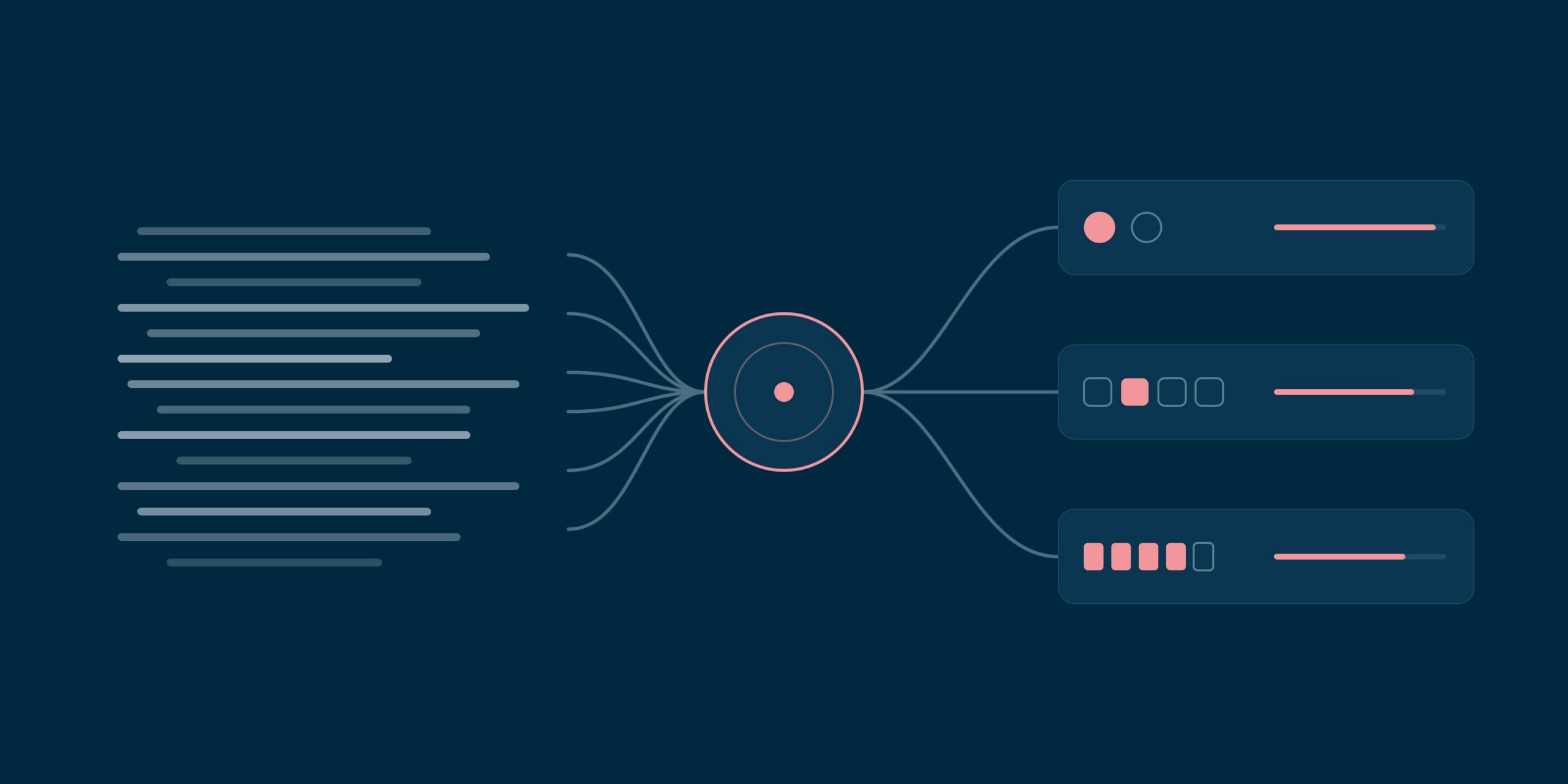
They convert two inputs: a state (the context); and a set of questions with a fixed decision space, which can be in the form of:
- binaries (called ‘noul’ – a yes/no question)
- classification (choose from a number of options), or
- a numerical score against a set scale (e.g. 1 to 5).
The output is a structured result within this bounded space and an associated probability for each answer/option. For instance, a customer feedback form could be routed through Jev to answer:
- whether it constitutes a complaint or not,
- which team it should be routed to, and
- a frustration score.
While LLMs have been used for this kind of structured decision-making for several years, System One models make it possible to do this at a cost and latency that allow for interesting new use cases.
Ultimately, you’d choose a System One model over an LLM for cost or latency. Cheaper decisions can replace an LLM in an existing process or cover every record instead of a sample; faster ones make real-time experiences possible.
1) Agentic Processing
One of Mantel’s most successful use cases has been claims and document processing using LLMs. Jev doesn’t emit text, so it won’t replace optical character recognition (OCR) or an LLM for extraction of fields from an image. However, it can handle the judgement calls around it: classifying the document type, or confirming which candidate value from a regex or LLM is correct. This has two advantages: it further reduces processing cost per claim and can provide a validation layer without meaningfully increasing cost or latency.


2. Novel customer experiences
TypeSafe quotes 70 to 500 milliseconds per call, fast enough for a page load. For instance, in a retail demo we’ve been building, shoppers type a filter in their own words, such as ‘dishwasher safe’ or ‘suits a six-year-old’, and Jev decides whether each product fits in near-real time. A listing of 48 products means 48 small judgments per page view, asked in parallel, which only works at this speed and price. The same approach can provide per-field feedback on a webform before a user ever hits send, or dynamically generate UI based on a user’s immediate behaviour without extensive loading times.

One example inspired by Shapeshift, which uses Jev to morph into a useful UI as you type
3. Risk and fraud screening
Many fraud teams screen claims and transactions against red flags with brittle rules, because LLM checks cost too much to run on every case. Jev can score each case against separate fraud indicators, and because TypeSafe trains it for calibration, an 80% score should be right about 80% of the time. Code can handle confident cases and send uncertain ones to an investigator.
4. Data enrichment
At US$0.042 per million input tokens, with output free, a million five-minute call transcripts (about 1,000 tokens each) would cost under US$100 to tag, so enrichment can cover a whole archive. Labels such as purchase intent or churn risk become features for the forecasting and propensity models you already run. Databricks’ ai_decide brings the same tagging into SQL.
5. Agentic guardrails and routing
An agent can make dozens of model and tool calls per task, and checking each with a second LLM adds cost and latency. Jev is pitched at exactly this: screening each call for prompt injection or leaked personal data, and routing requests to the cheapest model or code path that can handle them.
Where to start
Jev already has competition: OpenAI’s Decisions API and Microsoft-Decision-1 both launched within four weeks of it. Jev is still in early access and served from the US, so for most Australian enterprises data residency will be the first conversation. Consider where LLMs are being used in your business in high-volume scenarios; this is the first tactical area where you can produce measurable value, validate model accuracy and build internal capability.
This is the first in a series, and we’ll explore several of these use cases in more depth in upcoming pieces. In the meantime, reach out to Mantel if you’re interested in exploring how System One models could transform your existing AI workflows, or want to explore entirely new capabilities with this recent innovation.

